

The birds you see over the bay in January started somewhere near Canada.
North American waterfowl migrate along four broad corridors, and the largest of them — the Mississippi Flyway — funnels an enormous number of birds down the middle of the continent every fall. The Gulf Coast is where that highway ends. Some birds stop here for the winter, some refuel and keep going across the water, and the marshes and back bays along this coast are the last good ground before open Gulf.
Which is why, if you are out on the water here in the cool months, you will see birds you do not see in July: ducks working the shallows at dawn, big rafts of them sitting out in the protected bays, everything moving on a schedule that has nothing to do with the tourist season.
The resident birds
Not everything here is passing through. The great blue heron is a year-round local — the tall, grey, prehistoric-looking bird standing motionless in the shallows on one leg, waiting. It is the most patient hunter on the water and, at close range, a genuinely strange animal to look at: five feet of neck, a beak like a dagger, and a hunting strategy that consists mostly of doing nothing.
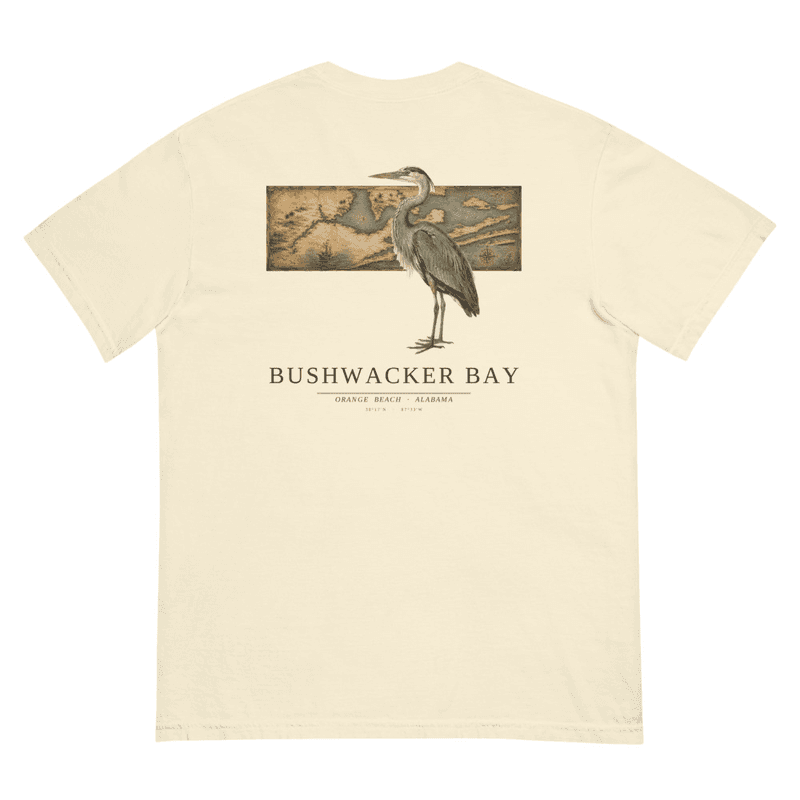
Snowy egrets, pelicans, ospreys, and laughing gulls fill in the rest. The pelicans get all the postcards, but the heron is the one that actually rewards watching, which is why it ended up on the back of a shirt: our Great Blue Heron design draws it the way the old naturalist plates did, standing over an antique chart of this coast.
Where the design came from
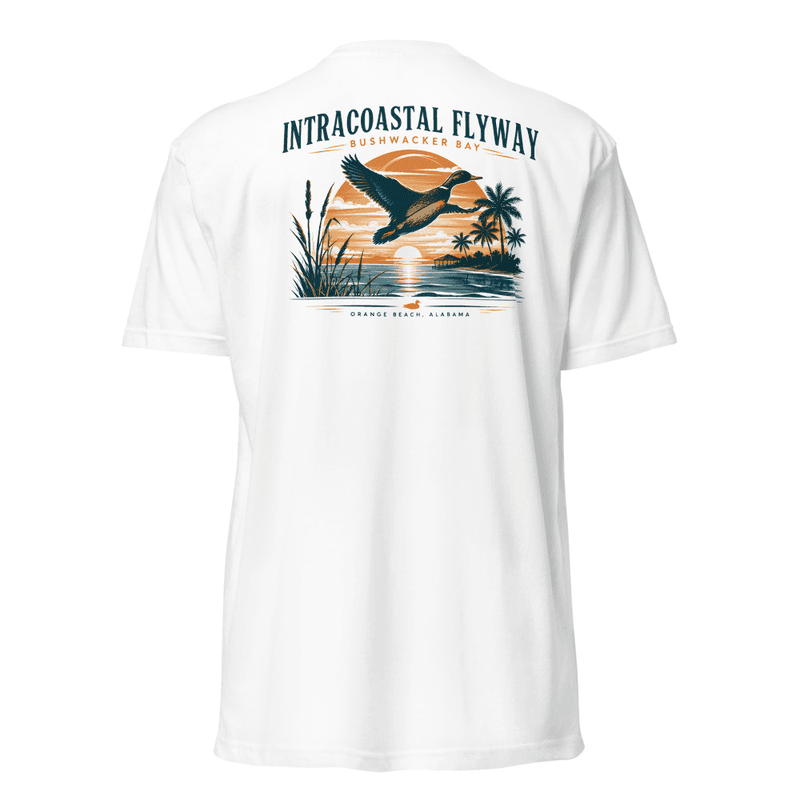
The Intracoastal Flyway print is the other half of that idea: a duck coming in low over the water at golden hour, the sun sitting on the horizon, marsh grass in the foreground and the pavilion out on the point. It is what the end of the flyway actually looks like from a boat — not a hunting scene, just the moment before the light goes.
Both designs come from the same conviction: this coast has real wildlife worth drawing carefully, and most beach merch settles for a cartoon pelican in sunglasses.
When to look
Fall through early spring is the season for migratory birds here; the back bays and marsh edges are more productive than the Gulf-front beach, and early morning beats midday. Bring binoculars, stay back from nesting areas, and note that shorebird nesting sites on this coast are often marked and protected — give them room.