

Orange Beach calls itself a fishing capital, and the geography backs it up.
Two things make this stretch of the Alabama coast unusually good for offshore fishing. The first is distance: you can leave the dock, clear Perdido Pass, and be on productive water quickly compared with a lot of the Gulf. The second is structure. Alabama has built one of the largest artificial reef zones in the country off this coast, and reef structure is what turns open sand bottom into a place fish actually live.
Add the standing rigs further out and you get a progression anglers here take for granted: nearshore reefs, then deeper reef systems, then true blue water where the pelagic fish are.
Roughly what shows up when
Seasons shift year to year and regulations change constantly, so treat this as orientation rather than a plan:
- Red snapper is the fish this coast is known for. The season is tightly regulated and set fresh each year — check the current Alabama season dates before you book anything around it.
- King and Spanish mackerel run the warmer months and are among the most accessible offshore fish here.
- Mahi, wahoo, and tuna come with warm blue water pushing in, generally the warm season, further out.
- Billfish — blue and white marlin, sailfish — are the deep-water prize, and the reason the summer tournament calendar exists.
- Inshore, speckled trout and redfish work the bays and grass edges nearly year-round and need no offshore trip at all.
You do not need a boat
The charter fleet here is large and runs everything from four-hour bottom-fishing trips suitable for kids to full-day offshore runs. Party boats are the cheapest way to get out. If you have never fished the Gulf, a half-day bottom trip is the honest introduction: you will catch fish, and you will find out quickly whether the ride agrees with you.
Where the camo came from
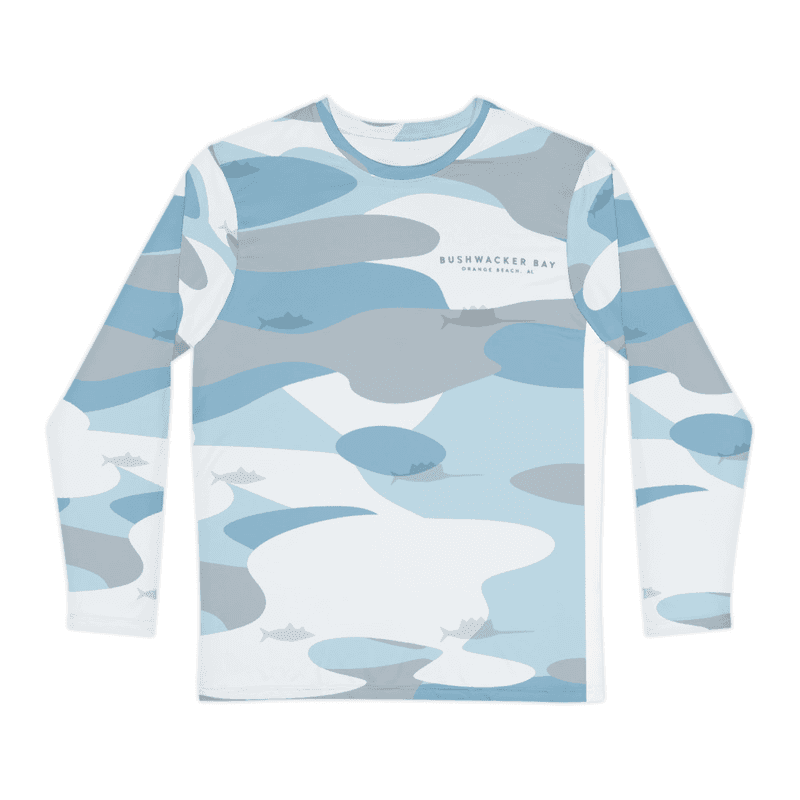
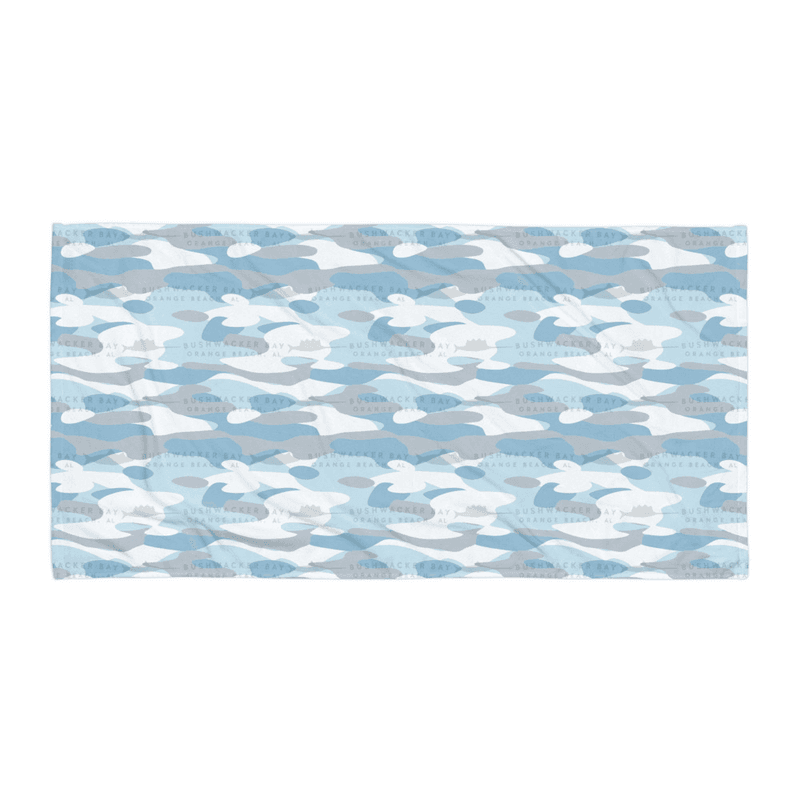
Our Offshore Blue pattern is built from the colors of that water on a clear day — white, pale blue, deep blue, and grey — with marlin, sailfish, and tuna worked into the pattern tone-on-tone, so they read as texture until you look closely. It is drawn from scratch rather than borrowed from the fishing brands that made blue-water camo popular, and it prints on shirts, kids’ and youth rash guards, and a beach towel.